An e-mail correspondence with Paul Page of
Whipping Boy
Whipping boy are chiefly remembered
for their
1995 acclaim-soaked album "Heartworm".
They were later to be dropped by Sony
records,
made a third record and broke up in
such
a low key fashion that they were described
in some sections of the media as having
simply
'disappeared'. The third album saw
its re;ease
this month two years after it was recorded
on the 'Low Rent' label. Rumours soon
circulated
that the band were reforming and flyers
were
issued in cork 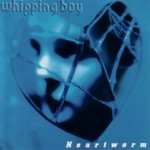 saying that they were playing in Elroys at
the end of the month. All very exciting
for
fans of the band but there was another
twist
in the tale when, on the Dave Fanning
show,
Paul Page (guitarist) revealed that
the "band"
now only contained two of the original
members
(neither of whom had written any of
Whipping
Boys' music) and angrily claimed that
such
a venture was nothing more than a "Whipping
Boy tribute band". The gigs were
subsequently
cancelled and Page says the whole series
was everything that happened in the
last
two years of the band coming to a head. saying that they were playing in Elroys at
the end of the month. All very exciting
for
fans of the band but there was another
twist
in the tale when, on the Dave Fanning
show,
Paul Page (guitarist) revealed that
the "band"
now only contained two of the original
members
(neither of whom had written any of
Whipping
Boys' music) and angrily claimed that
such
a venture was nothing more than a "Whipping
Boy tribute band". The gigs were
subsequently
cancelled and Page says the whole series
was everything that happened in the
last
two years of the band coming to a head.
Both out of personal interest and service
to CLUAS readers I wrote to Paul Page
asking
him to clarify what actually happened
with
the breakup of the band, the current
controversy
and his memories of the band. He was
generous
in his answers and some of what he
had to
say contradicted the opinions expressed
on
their third record (admittedly that
is probably
a bit of a simplification) confirming
the
idea that there had always been two
Whipping
Boys. In fairness he has maintained
an honest
dignity and respect for Whipping Boy's
work
throughout the whole affair. He also
revealed
that himself and Myles McDonnell may
form
another band in the future so, along
with
Fergal Mckee's new project we could
see two
bands descended from Whipping Boy,
anyway
here's what I asked over email and
what Paul
answered.
Kevin Fitton: As far as I can make out Whipping boy broke
up in late 98 and the Whipping Boy that were
going to play a national tour contained only
two of the original members. Is that true?
Paul Page: I am only aware of one gig - the Elroys
gig in Cork - that has now been cancelled.
Yes it is true it consisted of only two original
members.
KF: Would that have been Mckee and Myles McDonnel
or was it Mckee and Colm Hasset?
PP: McKee and Hassett.
 KF: Would you agree that this was perhaps a
bit underhanded the way that the gig was
organized? Underhand not only to the original
members of Whipping Boy but to the fans because
the first news of Whipping Boy in two years
was a news report in Hot Press saying that
they were considering reforming? Then at
the start of May flyers were in circulation
and there was a lot of excited people in
'an Brog' (pub in cork) that weekend when
in fact Paul Page, whose guitar work was
fundamental to what made Whipping Boy great,
had nothing to do with the project? KF: Would you agree that this was perhaps a
bit underhanded the way that the gig was
organized? Underhand not only to the original
members of Whipping Boy but to the fans because
the first news of Whipping Boy in two years
was a news report in Hot Press saying that
they were considering reforming? Then at
the start of May flyers were in circulation
and there was a lot of excited people in
'an Brog' (pub in cork) that weekend when
in fact Paul Page, whose guitar work was
fundamental to what made Whipping Boy great,
had nothing to do with the project?
PP: To say it was underhand is an understatement.
The first Myles and I knew of the gig was
when I read the news on a Cork website. By
then, posters and flyers had been issued.
Obviously, passing it off as a WB gig was
unfair on fans of the band and this was one
of our main motivations in bringing the facts
of the matter to light. We put a huge amount
of effort and love into WB; we wrote all
the music and we were not going to stand
idly by and allow the name to be hijacked
in that fashion.
KF: Had Killian McGowan any connection to (to
quote you) "the Whipping Boy tribute
band"? What exactly was his original
position in relation to the band circa Heartworm
and your last album?
PP: Let me clarify things further. Killian is
part of a new band Fearghal and Colm are
forming and as such was part of this WB effort.
Killian was brought in after Heartworm to
play additional guitar and keyboards in a
live context. He played no guitars on either
"Heartworm" or the new album whatsoever,
and was not involved in the writing process
at all. He played some keyboards on the new
album. In addition, Myles composed the string
parts on the new album and Killian wrote
the parts down.
KF: Are you still on good terms with the members
who tried to reform the band?
PP: What do you think? In truth, I had not spoke
to either since the album was finished. A
lot of stuff happened in the last two years
of the bands existence that I would rather
not go in to. The funny thing is, this whole
episode with the fake gig seems to have brought
things to a head. I really wish we could
close the door on WB with a little dignity
and leave things less sour. In order to do
this, it has been suggested that we do a
few "farewell" shows and leave
things on a less bitter note.
KF: Were you happy with or should I say proud
of your last record? Are you proud of the
other records? Do you have a favourite Whipping
Boy record?
PP: I am particularly proud of this latest album.
Because it was done in a completely independent
fashion and because of the huge effort it
took to finish, it means a lot more to me
now. To be honest, I don't care how it sells;
the important thing is we went out with our
heads held high. My favourite is still "Heartworm"
for obvious reasons.
KF: Ferghal Mckee comes across through his lyrics
not so much on 'Whipping Boy' but on "Heartworm" and the earlier
material as not exactly the nicest
person
on earth to be around, was he hard
to work
with?
PP: I have nothing to say about Fearghal.
KF: The band broke up in 1998. What were factors
in the breakup? The fact that ye had been
given the run around with record labels?
Not getting on so well with each other? Musical
differences or lacking the drive of youth
to go and tear peoples houses down?
PP: I have absolutely no complaints about Sony.
Bands have to realise if they sign to a major,
they will not receive sizeable advances and
all the benefits being on a major offers,
and be allowed sell zero records in return.
In fact they will be expected to sell considerably
more than zero records or they will be let
go. Sony did their best with us, and even
though we sold approx. 70,000 worldwide,
it was not enough. The main cause of our
break up, in my opinion was an element of
self doubt that crept into the band. Suddenly,
things were not going so well and inevitably
the first thing to look at was the music.
There was a suggestion that we needed to
incorporate a dance element to the music,
that it needed to be more edgy; all kinds
of things but the reality is you make the
music that you enjoy making. I think the
new album is a vindication of the belief
Myles and I always maintained in WB's music.
KF: The theme of ' Ghost of elvis' (track on
the new WB album) kind of contradicts the
question of 'lacking drive' doesn't it?
PP: "Drive" is something that setbacks
and disappointments can knock out of you,
and I think it is fair to say over the course
of the bands existence we had plenty of those.
But I still think there is evidence of the
spark that still existed between us on this
album and that is the sad part of the split.
KF: Do you have any particular favourites off
the third record.
PP: My own favourites would be "One to
call my own", "Ghost of Elvis"
and "So much for love".
KF: Are you in non-musical employment yourself
now or what are you doing? If so how does
it suit you?
PP: Yes after we finished this record over a
year and a half ago, we all realised that
we would have to go back to work. Unfortunately,
there is a tendency in a band situation to
live a cocoon- like existence and to forget
that life goes on outside the band. You grow
older, maybe have a family and they look
to you and become your main priority. How
does it suit me having to work? I have no
problem with it. I would rather be making
music and make my living that way but the
reality suggests that is not feasible at
the moment.
KF: Any further musical aspirations yourself?
PP: Myles and I have a lot of material that
we have written in the last two years, we
are hoping to demo it soon with a view to
setting up a new band soon. I am excited
about music again - there is so much great
music out there undiscovered. Recently I
heard Joe Pernice's records and they just blew me away. We
will always make music, even if it
is only
for the pure joy of making it, you
cannot
just stop after putting so much of
your life
into it.
KF: JJ72 are getting much the same treatment
from the British press as yourselves did
in 1995 or so. Would you have any advise
for a young band in that position?
PP: I am loathe to dish out advice to anyone;
I firmly believe in allowing people to make
their own mistakes as this can actually have
a positive effect long-term. One thing I
would say is everything you do in music you
should do with your eyes wide open and try
and control your own destiny as much as possible.
KF: Finally, looking back from "I think
I miss you" to "So much for love",
it's a massive and consistent legacy. You
must be very proud?
PP: I am proud of a lot of what we did. I regret
we did not get to make more records or play
in the US but there you go. I do know that
our records touched some people and that
is as much as you can hope for in making
music.
Thanks to Kevin Fitton and Paul Page for
the above
|


